
Prepare to Be Wrong
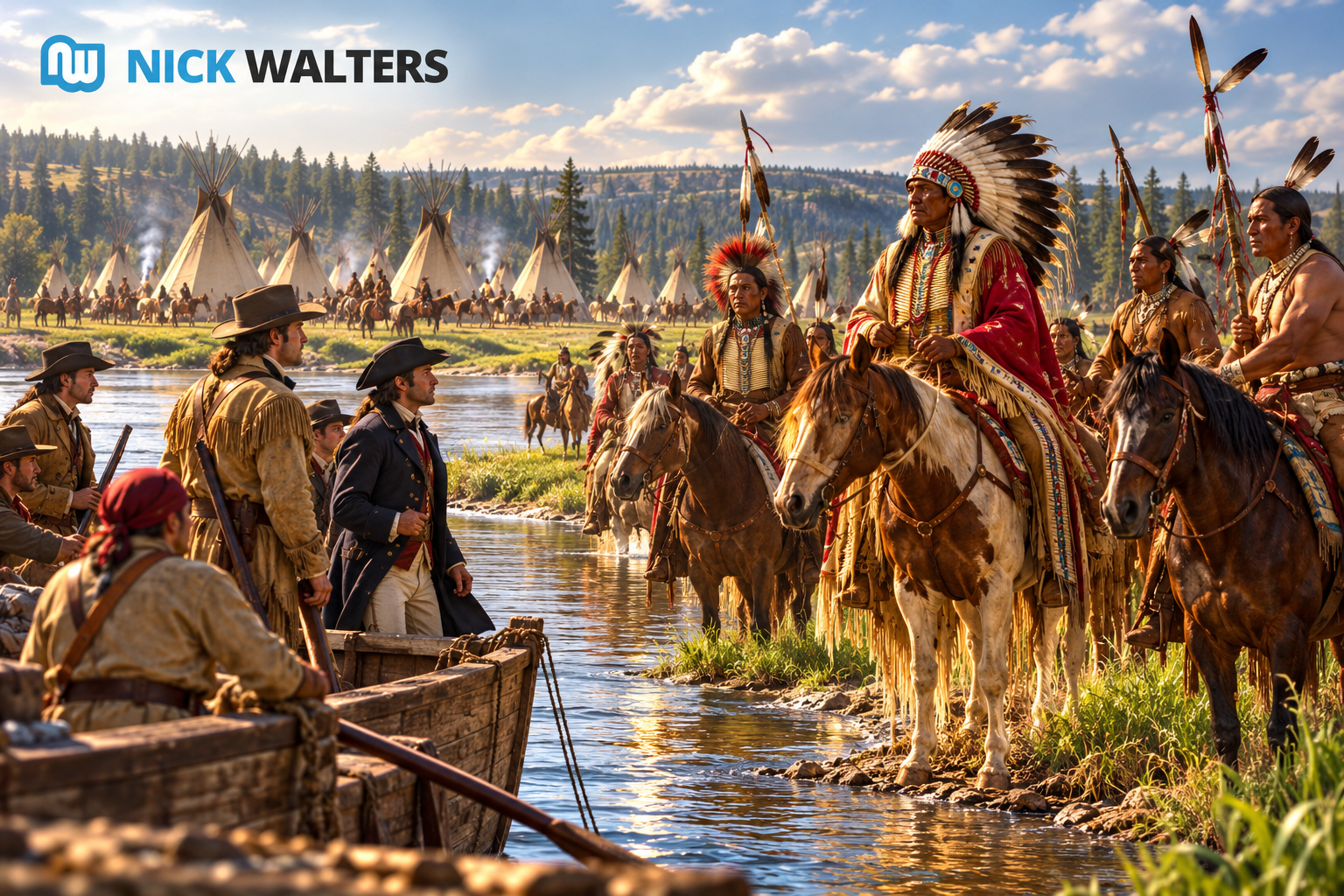
An AI-generated historical illustration depicting a tense encounter between members of the Lewis and Clark Expedition and Teton Sioux leaders along the Missouri River in September 1804. The scene illustrates the uncertainty and potential for conflict that expedition leaders faced despite their extensive preparations.
What Chip and Dan Heath’s Decisive teaches about warnings, and a tense afternoon on the Missouri River in 1804
Most of us are more confident in our predictions than we have any right to be.
That’s one of the central ideas in Decisive: How to Make Better Choices in Life and Work by Chip and Dan Heath. The Heath brothers spend a good part of the book on the ways our decisions go wrong, and one of the most common is overconfidence. We build a forecast in our heads (this is how the meeting will go, this is how the customer will respond, this is how the launch will play out) and then we plan for that one future as if it were already settled.
Their answer isn’t to stop forecasting. It’s to broaden it. In a section they call “Prepare to Be Wrong,” they encourage leaders to consider a range of outcomes instead of betting everything on the one they expect. They also recommend setting “tripwires”: signals that force you to stop and reconsider when circumstances start moving beyond your assumptions.
What I took away from that is simple, but it has stuck with me. A warning has little value if nothing changes after you receive it. New information should change an assumption, a plan or a preparation, or confirm that the existing plan is still the right one. What it shouldn’t do is simply get added to the pile of things we already know.
Here’s a story from Lewis and Clark that shows exactly what that looks like in the real world.
By September 1804, the Corps of Discovery had been working its way up the Missouri River for more than four months. Lewis and Clark had not gone into Sioux country blind. Long before leaving, Lewis had gathered journals, maps and firsthand accounts from traders and earlier explorers who had worked the river. Some of those sources described the Teton Sioux as a significant power along the Missouri, and as people the expedition would need to approach carefully.
Then the warnings got closer. In late August, during a council with the Yankton Sioux, a chief known as Half Man cautioned the captains that the nations farther upriver might not readily listen to the message they were carrying. This wasn’t an old journal or a years-old map. It came from a leader who understood the political ground immediately ahead of them.
On September 23, three Lakota boys swam out to the boats and reported a Teton encampment of roughly eighty lodges nearby. The encounter wasn’t somewhere up the river anymore. It was coming to them.
Two days later, the meeting began. Lewis and Clark used the diplomatic tools that had worked elsewhere: speeches, gifts and demonstrations of American technology. Several chiefs came aboard the keelboat. But the meeting grew tense. A chief the Americans called the Partisan behaved in ways Clark considered offensive, and the confrontation escalated until Clark drew his sword. Teton warriors readied their weapons. So did the men of the Corps.
For a few moments, an expedition that had spent months gathering intelligence stood very close to armed conflict. What defused it wasn’t anything in a journal or a briefing. It was Black Buffalo, one of the principal Teton leaders, who stepped in and helped keep the situation from becoming a fight.
I don’t want to push the Heaths’ framework onto people living two centuries before the book was written. Half Man’s warning wasn’t a tripwire Lewis and Clark set for themselves. But the idea gives us a useful way to look at the moment. The captains had good information, and the warnings kept getting louder the closer they got. The leadership question is what happens between hearing the warning and walking into the room.
Every organization faces that question. We collect plenty of information: reports, surveys, forecasts, briefings. The harder discipline is letting it change what we actually do before the critical moment arrives, and then staying ready to learn once reality starts testing our assumptions.
Field Notes
Before your next big decision, write down two or three outcomes other than the one you expect. What would you do differently if each one happened?
Decide in advance what signal would make you stop and rethink: a number, a date, a piece of news. That’s your tripwire.
When a warning comes in, ask what it changes. If the honest answer is “nothing,” make sure that’s a decision and not an oversight.
Recommended Reading
If this idea interests you, I recommend reading Decisive: How to Make Better Choices in Life and Work by Chip and Dan Heath. It’s one of the most practical books on decision-making I know.
This post is part of Finding Your Way, where proven leadership ideas meet stories from the Lewis & Clark expedition. The full stories will be collected in my upcoming book, Beyond the Map. Sign up to be notified when it’s released.
