Finding Your Way · A Leadership Series

Beyond the MapFinding Your Way with Lewis & Clark

Lewis and Clark led people into the unknown — incomplete information, unfamiliar terrain, no roadmap. Nick Walters explores what that journey teaches today's leaders.

The Book

More Than a History Book

Real history, proven leadership ideas, and deep scholarship — woven into one story leaders can use.
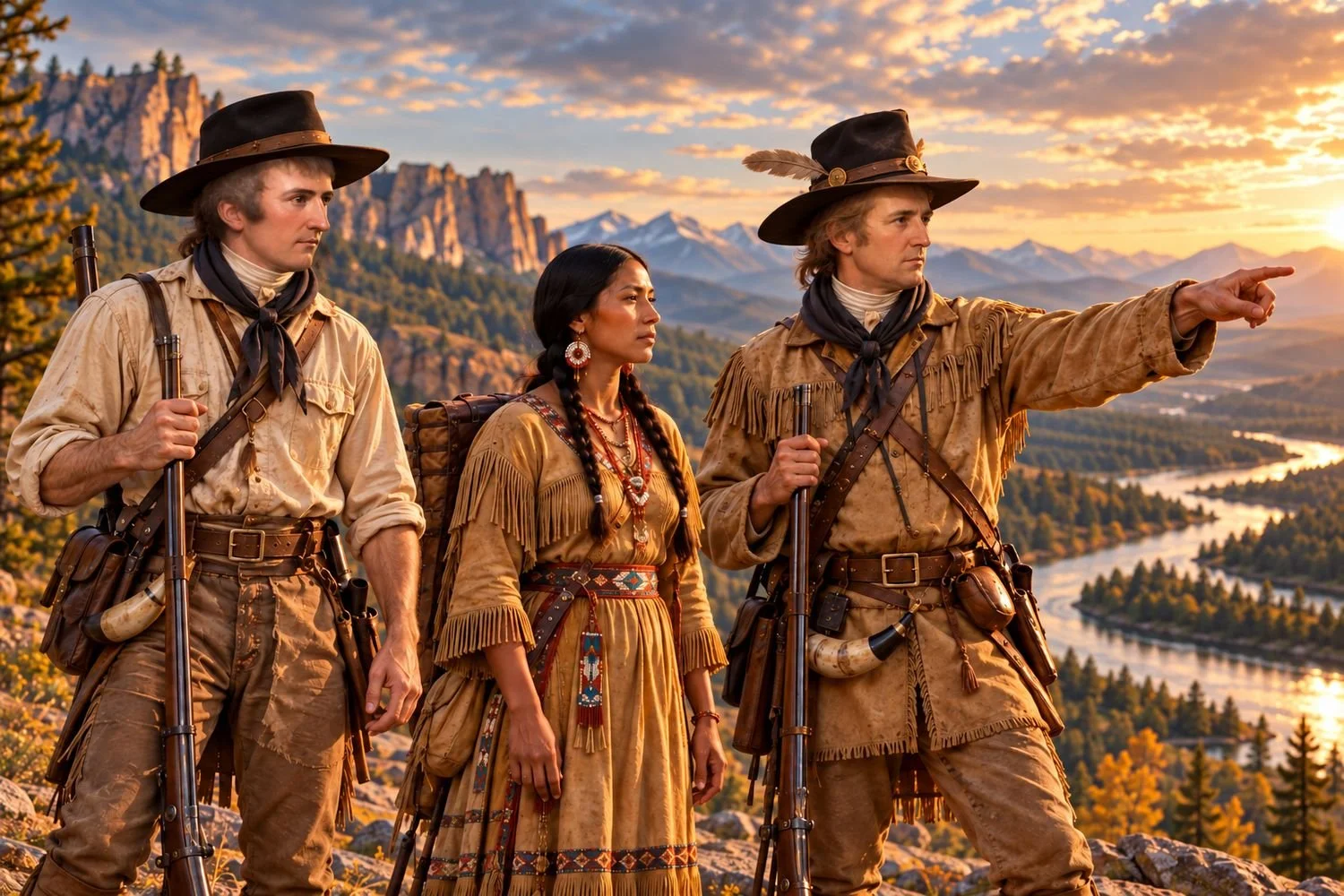
Lewis, Sacagawea, and Clark surveying the mountains ahead
Looking West, Summer 1805. An AI-assisted historical reconstruction depicting Meriwether Lewis, Sacagawea, and William Clark surveying the mountainous country ahead as the Corps of Discovery approached the Continental Divide.

The Expedition

Real People, Real Decisions

The real people, decisions, and setbacks the Corps of Discovery faced on the way west.

Modern Leadership Thinking

Proven Ideas

Every chapter is cross-referenced against today's leading business and leadership books.

We Proceed On Scholarship

Deep Research

Built on 50+ volumes of Lewis & Clark Trail Heritage Foundation research.

Finding Your Way · Program Topics

Ten Leadership Topics, One Expedition

Each topic pairs a timeless leadership principle with a moment from the Lewis & Clark Expedition. Tap a topic to see the story behind it.

01LeadershipHow do you lead when nobody—not even the leader—knows exactly what lies ahead?+
On the trailLewis and Clark commanded a military expedition into territory largely unknown to them, constantly balancing authority with reliance on people who sometimes knew more than they did.
02StrategyA good plan gives you direction without pretending you can predict everything that will happen.+
On the trailJefferson and Lewis spent years preparing the expedition, but the Corps repeatedly discovered that their maps, geographic assumptions, distances, transportation plans, and expectations were wrong.
03TeamsGreat teams aren't built by finding people who are alike—they're built by combining people whose strengths are different.+
On the trailLewis and Clark themselves are the clearest example: Lewis selected Clark because Clark brought capabilities, temperament, experience, and leadership strengths that complemented his own.
04CommunicationThe message you send doesn't matter if it isn't the message the other person receives.+
On the trailThe expedition's encounters with Native nations repeatedly required interpreters, signs, gifts, speeches, diplomacy, and complicated chains of translation in which misunderstanding could have serious consequences.
05DecisionsLeadership often means making the best decision available before you have all the information you want.+
On the trailAt the Missouri/Marias junction, the Corps believed one route was correct while Lewis and Clark believed the other was the Missouri; the captains had to evaluate the evidence and make a consequential decision without certainty.
06ExecutionVision gets people started; disciplined execution gets them to the destination.+
On the trailThe Great Falls portage turned a geographic obstacle into an enormous operational challenge requiring logistics, manpower, improvisation, equipment management, discipline, and weeks of exhausting work.
07AdaptabilityWhen reality proves the plan wrong, effective leaders change the plan—not the objective.+
On the trailLewis's experimental iron-frame boat was carefully planned but ultimately failed because suitable materials for sealing it weren't available; the Corps abandoned the idea, built dugout canoes, and continued west.
08InfluenceSome of the most important leadership happens when you have no authority over the people whose cooperation you need.+
On the trailLewis and Clark could command the Corps, but they could not command the Mandan, Hidatsa, Shoshone, Nez Perce, or other Native peoples whose horses, information, trade, guidance, and cooperation could be essential.
09Developing PeopleStrong leaders don't simply use people's abilities—they give people opportunities to become more capable.+
On the trailSergeants and other Corps members received significant responsibilities throughout the expedition, including commanding detachments, reconnaissance, hunting, navigation, recordkeeping, and independent assignments.
10FollowershipKnowing when to follow someone else's expertise can be as important as knowing how to lead.+
On the trailLewis was the expedition's commanding officer, but Clark frequently exercised operational leadership, while at other moments guides, interpreters, hunters, boatmen, or Native advisers possessed knowledge neither captain had.
Breakout

1–2 Topics

Choose one topic for a stand-alone breakout, or combine two into a 35–40 minute session.

Keynote

5–6 Topics

A 60-minute keynote weaving five or six topics into one story of leading through the unknown.

Half-Day Retreat

All 10 Topics

A 5–6 hour retreat covering every topic — ideal for leadership teams and staff retreats.
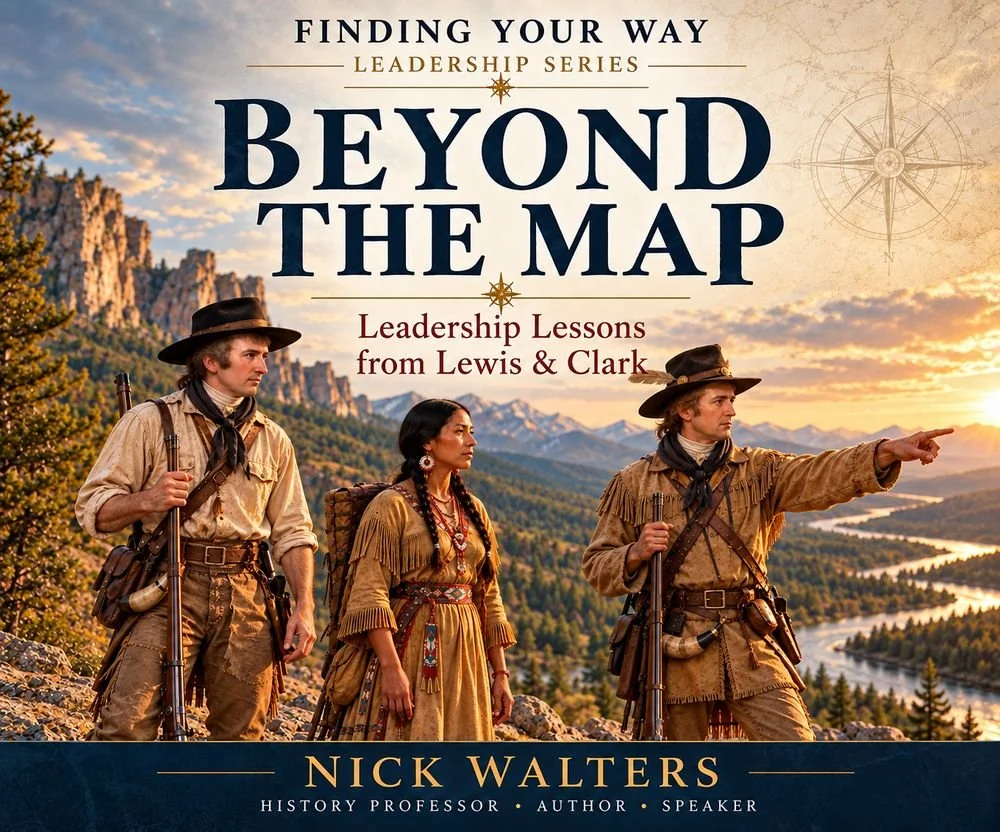
Beyond the Map book cover (preliminary)
Coming Spring 2027

Don't Miss the Book Launch

Beyond the Map

The first book in Nick Walters' Finding Your Way series uses one of America's greatest journeys to bring enduring lessons in leadership, teamwork, communication, adaptability, and decision-making to life.

Target publication: Spring 2027

Notify Me

No clutter. Just books and occasional Finding Your Way updates.